Solitaire Zen - Cards Master
- 4.8
- Rating
- 10.00K
- Installs
- Free
- Price
 Analysis by App-foxy
I approached Solitaire Zen - Cards Master as the kind of card game you open when you want a quiet break rather than a loud challenge. It is a free solitaire game from FelicityGames, aimed at Everyone, and its central appeal is easy to understand: a familiar card format, a relaxed pace, and enough decision-making to keep your attention gently occupied. After spending time with it, I found that its strongest quality is how quickly it gets out of the way and lets the cards become the focus.
That simplicity is also the main thing to understand before installing it. This is not the right pick if you want a large collection of competitive modes, an elaborate story, or a social card experience. It works better as a personal routine: a few minutes while waiting, a calm evening activity, or a small mental reset between demanding tasks. The store summary describes it as a way to train your brain and relax, and that combination matches my experience more closely than treating it as a high-pressure puzzle game.
Getting comfortable with the game from the first deal
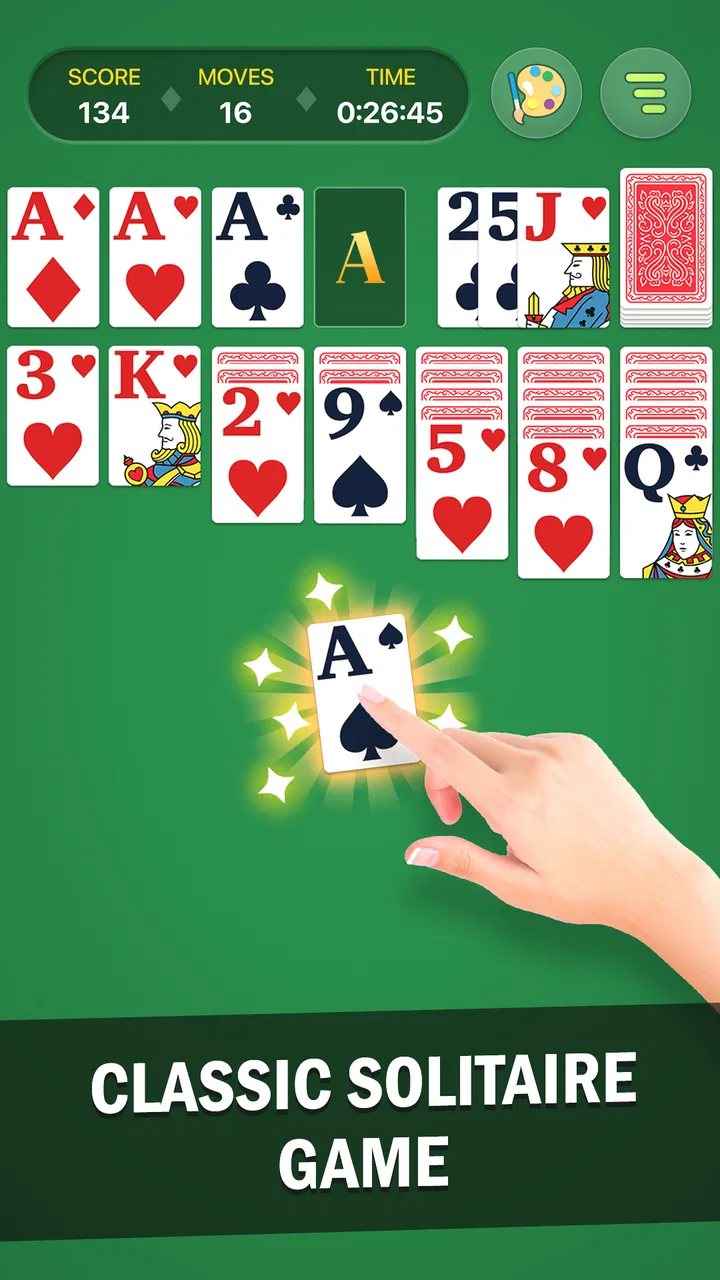
The game belongs to the card category, so anyone familiar with solitaire will recognize the basic rhythm immediately: inspect the layout, find useful moves, uncover hidden possibilities, and avoid spending valuable options too early. For a first-time player, that makes the learning curve reassuring. You do not need to memorize a complicated rulebook before making a meaningful move. The challenge comes from choosing the order of actions, not from learning a huge collection of systems.
You May Also Like

 AccuWeather: Weather Radar
AccuWeather Review: A Quick, Clear Forecast for Everyday Decisions
For everyday plans, the best forecast is the one you can understand quickly. AccuWeather makes rain timing, radar, and local conditions easy to act on, with a few trade-offs.

 Hill Climb Racing
Why Hill Climb Racing Still Turns Crashes Into One More Run
A tiny car, a bumpy hill and one more upgrade: Hill Climb Racing keeps resurfacing because its simple chaos makes every near-miss feel personal.

 AliExpress - Shopping App
AliExpress Makes Global Shopping Feel Personal, but Shoppers Bear the Risk
AliExpress turns a global marketplace into a pocket-sized discovery engine. Its reach is useful, its shopping loop compelling, and its trade-offs easy to miss.

 Lords Mobile: Kingdom Wars
Lords Mobile Is a Kingdom-Building Routine, Not a Quick Match
A case-by-case verdict on the building, battles, device demands, and social commitments that make Lords Mobile rewarding for some players and exhausting for others.

 PDF Scanner app - TapScanner
TapScanner Makes Paperwork Easier to Capture, Check, and Share
TapScanner makes scanning with a phone feel less like a rescue operation and more like a dependable step in getting work done. Its capture tools are useful, though not flawless.

 Block Blast!
 Shows How Much a Puzzle Game Can Leave Out
A quiet grid game shows why puzzle players increasingly value instant clarity, repeatable skill and low-pressure play—and where the genre still needs to catch up.
More From Our News Desk
View All News


My advice is to begin slowly instead of tapping the first available card automatically. Look across the layout and ask which move will reveal another card or open a useful space. That small pause changes the game from random tapping into a compact planning exercise. Even when the deal does not go perfectly, the process gives you something constructive to think about without demanding the concentration of a long strategy session.
The first setup is straightforward in practical terms: install the free game, open it, and start with the initial deal. The current version is 3.13.4, and it runs on devices using Android 10 or later. That operating-system requirement is worth checking before you commit storage space or troubleshoot a problem that is really a compatibility issue. The game is also available with optional in-app purchases ranging from $0.49 to $99.99 per item, so I would treat the free download as the starting point and review any purchase prompt carefully rather than assuming every extra is necessary.
I particularly like the fact that the game can be approached without a long preparation ritual. A first-time user can understand the basic objective through the cards themselves, then improve by observing which choices create more room. If you have never played solitaire on a phone, use the opening round as a tutorial you control: make one move, check what it exposes, and only then decide whether to continue that line.
The first meaningful success is a smart move, not simply finishing
New players often define success too narrowly. Completing an entire deal is satisfying, but the first useful milestone is making a move that improves your future options. Moving a card to uncover what sits beneath it, arranging cards so a blocked sequence becomes available, or preserving a flexible card for later can all be meaningful successes. Thinking this way makes the opening minutes less intimidating and helps you learn the game’s logic without feeling punished for not winning immediately.
One practical workflow worked well for me. I first scanned for moves that uncover concealed cards, then checked whether an empty space could be used productively, and only after that considered routine transfers. This order reduces the chance of using a helpful card merely because it is available. It also gives the round a clearer shape: open information first, create space second, and tidy the remaining layout when the important choices are visible.
Another useful habit is to avoid making every legal move in sequence. Solitaire rewards flexibility, and a move that looks attractive now may remove the only card that could help later. When two choices appear similar, I usually prefer the one that reveals more information or leaves more possible arrangements. That is a small but non-obvious advantage for beginners because it turns the game into a lesson in preserving options rather than chasing immediate movement.
The relaxed presentation makes this style of play feel natural. I can imagine using it during a short coffee break when I want something more engaging than scrolling but less demanding than a competitive game. A realistic session might be opening it while waiting for an appointment, playing one deal, and closing it after a clear stopping point. The format suits that routine because a card round has a recognizable beginning and end, unlike an endless feed that encourages you to keep going.
Where first-time players may hesitate
The most common confusion is usually not the rules themselves but the meaning of a move. If a card can be moved, that does not automatically mean it should be moved. Players coming from faster mobile games may expect every highlighted action to be equally useful, while solitaire asks you to judge timing. I recommend treating available moves as choices, not instructions.
A second point of friction is the temptation to restart too quickly. An awkward board can look lost when it really needs a different order of play. Before abandoning a deal, I retrace the last few decisions and ask whether I revealed a card too early, filled a useful space, or moved a sequence that would have been more valuable elsewhere. This review habit is more helpful than blaming luck because it shows exactly which decisions you can improve next time.
It is also sensible to separate the game’s relaxing purpose from the idea of constant mental improvement. Playing solitaire can encourage attention, planning, and pattern recognition, but I would not treat it as a substitute for structured learning or a formal brain-training program. Its value is lighter and more immediate: it gives your mind a contained problem with a calm pace. That is enough to make it worthwhile, but keeping expectations realistic makes the experience more enjoyable.
Small decisions that make the rounds more rewarding
One of my favorite approaches is to use each deal as a short planning exercise. Instead of measuring the round only by whether it ends in a win, I choose a focus for that session. I might pay attention to uncovering cards efficiently, preserving open spaces, or avoiding unnecessary reversals. This creates variety without needing extra modes and gives a repeat player a reason to stay thoughtful when the basic rules have become familiar.
Another tip is to play at the speed that matches your purpose. If I am taking a short break, I make deliberate moves and stop when the break is over. If I want a more absorbing session, I analyze the board more deeply and try to understand why a line succeeded or failed. The same game can therefore serve as a quick distraction or a quiet concentration activity, but it works best when I decide which of those roles I want before starting.
I would also keep purchase decisions separate from gameplay decisions. Because the game is free to install but includes optional purchases, a user who only wants basic solitaire should not feel obliged to buy anything immediately. I prefer to play long enough to understand whether the core routine fits my habits, then decide whether any paid item genuinely improves that routine. This is especially important when a game is used casually, since a small impulse purchase can feel less valuable if you only open it occasionally.
The age rating of Everyone makes it approachable for a broad audience, including people who want a simple card game without mature themes. Still, “easy to start” does not mean every player will enjoy it equally. Someone who wants rapid action may find the pace too gentle, while a longtime solitaire player seeking unusual rule variations may find the familiar format too restrained. Its appeal depends on wanting a quiet, recognizable card experience rather than novelty at every turn.
How it compares with familiar solitaire alternatives
Compared with playing solitaire with physical cards, this mobile version removes the setup and cleanup that can make a quick round inconvenient. I can begin immediately and use a small gap in the day without needing a table. Physical cards still win if I want a screen-free activity or enjoy the tactile process of shuffling and dealing, but the phone version is more practical for spontaneous play.
Compared with broad card-game collections, this title feels more focused. A collection may be better for someone who wants to switch between solitaire variants, matching games, poker-style rounds, or multiplayer tables. Solitaire Zen - Cards Master is a better fit when I want one familiar activity without spending time deciding which mode to launch. That focus is calming, although it may become limiting for players who need constant variety.
It also differs from competitive card apps. There is no reason to approach a quiet solitaire round as if another player is waiting for a mistake. That makes it suitable for winding down, but not for users who are motivated by rankings, live opponents, or a strong sense of performance. If competition is what keeps you engaged, a multiplayer alternative will probably hold your attention longer.
Against generic puzzle games, the advantage here is familiarity. I do not have to learn a new visual language or understand a complicated objective before I can play. The trade-off is that the game’s depth comes from ordering and restraint rather than a wide range of mechanics. In my view, that is precisely why it works for short sessions, but it is also why a player looking for dramatic progression should look elsewhere.
Who will get the most from it
I would recommend this game to someone who wants a dependable way to fill small pauses with light concentration. It suits people who already enjoy solitaire, beginners who want a gentle entry into card games, and players who prefer solo activities over social competition. It is also a reasonable choice for anyone trying to replace aimless phone browsing with something that has a clear beginning, a clear objective, and an obvious point at which to stop.
It is less suitable for someone who needs extensive customization, a story-driven adventure, or a large multiplayer community. I would also hesitate to recommend it as a main game for a user who becomes frustrated by repeated deals or who expects every round to be winnable through speed alone. The calm design does not remove the uncertainty built into solitaire, and patience remains part of the experience.
For a first-time user, the best next step is simple: play one complete opening round without worrying about efficiency, then replay with one goal in mind—reveal more cards before committing to routine moves. That second attempt usually teaches more than reading a long explanation because you can connect each choice to the layout in front of you. If the slower, thoughtful rhythm feels pleasant rather than restrictive, the game has probably found its audience in you.
FelicityGames has positioned this as an accessible card game, and its reception reflects that broad appeal: it holds a 4.8 average from over 600 ratings, with more than 40 written reviews and over 10 thousand installs. Those figures suggest a healthy early audience for a game released on September 12, 2025, while the relatively recent release also means I would judge it mainly by the quality of the core routine rather than expecting years of accumulated content.
My recommendation after settling into the routine
After using it as a short-break game, I see Solitaire Zen - Cards Master as a focused and approachable option rather than an ambitious all-purpose card platform. Its strongest feature is the balance between instant familiarity and enough decision-making to prevent the rounds from becoming completely passive. I can open it, make a few considered choices, and leave feeling that I used the break for something more satisfying than random scrolling.
The limitations are equally clear. The familiar solitaire structure will not satisfy everyone, and optional purchases mean I would pay attention during the download-to-play journey instead of tapping through prompts automatically. Players who want competition, many distinct modes, or a deep progression system should choose a different kind of card game. For everyone else, the free starting point makes it easy to test without a large commitment.
My final advice is to approach it as a calm daily tool, not a test of speed. Give the first deal time, learn from the order of your moves, and use the next round to apply one small improvement. If that process sounds enjoyable, this game can become a pleasant companion for waiting rooms, quiet evenings, and brief moments when you want your brain occupied without being overwhelmed. Its real strength is deliberate simplicity: it gives you just enough to think about, then lets you decide when the break is over.
FAQs for Solitaire Zen - Cards Master
01What is Solitaire Zen - Cards Master?
Solitaire Zen - Cards Master is a relaxing card game centered on classic solitaire-style gameplay. It is designed for short sessions as well as longer play, combining familiar card arrangements with a calm presentation. Depending on the version available on your device, it may include different layouts, daily challenges, progression features, themes, statistics, or optional rewards that encourage regular play.
02How do you play Solitaire Zen - Cards Master?
The main objective is generally to organize cards according to the rules of the selected solitaire variation, usually by building sequences in the correct order and moving cards between columns or foundation piles. Tap or drag cards to make moves, reveal hidden cards, and plan ahead before clearing the board. Beginners should start with the standard mode and use hints only when they are genuinely stuck.
03Does Solitaire Zen - Cards Master work offline?
Solitaire games commonly support offline play, which makes them convenient for travel, commuting, or relaxing without an internet connection. However, some functions may still require connectivity, including advertisements, cloud synchronization, online rankings, daily content, purchases, or updates. After installing Solitaire Zen - Cards Master, it is worth opening the game once online and checking which modes remain available when airplane mode is enabled.
04Is Solitaire Zen - Cards Master free to download and play?
The app may be available as a free download, but free access does not always mean that every feature is unrestricted. Many card games use optional advertisements, rewarded videos, in-app purchases, or paid upgrades such as ad removal, extra hints, cosmetic themes, or additional content. Review the store listing and purchase settings carefully, especially if children may use the device.
05Is Solitaire Zen - Cards Master suitable for beginners and casual players?
Yes, the familiar solitaire format makes Solitaire Zen - Cards Master accessible to most casual players, even if they have limited experience with digital card games. The calm style and turn-based pace allow you to play without pressure, while hints or undo options can help when a move is unclear. Players seeking competitive depth should also check whether the available modes offer meaningful challenges beyond basic solitaire.
Pros
- Relaxing gameplay with a calm
- low-pressure atmosphere
- Simple controls make it easy for beginners to start playing
- Short rounds are convenient for quick breaks or commutes
- Smooth card animations make moves feel satisfying
- Daily challenges add variety beyond standard solitaire games
Cons
- Some features may require watching ads or making in-app purchases
- Gameplay can become repetitive after extended sessions
- Random deals may occasionally feel unfair or unwinnable
- Limited social features for players seeking competitive interaction
- Requires careful attention
- especially on smaller phone screens

Solitaire Zen - Cards Master
Gallery